
































Children's Museum of Manhattan - various times Pick
Camp - 11:00 AM
Shubert Theatre - various times
August Wilson Theatre - various times
Children's Museum of Manhattan - various times Pick
Camp - 11:00 AM
August Wilson Theatre - various times
Brooklyn Bridge Park Environmental Education Center - 3:00 PM Pick
Children's Museum of Manhattan - various times Pick
Camp - 11:00 AM
National Museum of Mathematics Pop Up - 6:30 PM Pick
Children's Museum of Manhattan - various times Pick
Skyscraper Museum - 10:30 AM Pick
Green-Wood Cemetery - 10:00 AM Pick
The Jewish Museum - 11:00 AM Pick
MoMA Design Store, Soho - 11:00 AM Pick
Blue Heron Nature Center at Blue Heron Park - 1:00 PM Pick




Activity Guides
- Beaches & Lakes
- Best Of Lists
- Birthday Parties
- Boats
- Boredom Busters
- Camps
- Childcare
- Christmas/Hanukkah
- City Guides
- City Hacks
- Classes & Enrichment
- Community
- Crafts & Recipes
- Earth Kids
- Easter
- Fairs & Festivals
- Fall Activities
- Family Travel
- Farms & U-Pick
- Free Activities
- GoList
- Halloween
- Holidays
- Hotels & Resorts
- Indoor Activities
- Museums
- News & Openings
- Outdoors
- Parent Talk
- Parks & Playgrounds
- Play Gyms & Sports Centers
- Pools & Spray Parks
- Preschools & Schools
- Restaurants
- Shows
- Skiing & Winter Sports
- Special Needs
- Special Occasions
- Sports
- Spring Activities
- STEM
- Stores & Services
- Summer Activities
- Theme & Water Parks
- Trains, Dinos & Heroes
- TV, Film & Movies
- Virtual
- Visitors Guide
- Weekend Events
- Weekend Trips
- Winter Activities
- Zoos & Gardens
99 Sensory Activities for Toddlers, Infants, and Kids of All Ages
All kids can be affected by sensory processing issues, where certain situations and feelings just become overwhelming. Exposing kids to a variety of sensory activities in a calm, playful manner can alleviate some of these problems.
In that spirit, we've put together this list of 99 sensory activities for toddlers and babies up through big kids; in fact, they're even helpful for adults. My kids' school's occupational therapist once gave a seminar to parents on sensory balance and activities for maintaining a sensory-savvy schedule. I now realize my engine tends to run too low and I need to work harder at energizing myself throughout the day. I have incorporated some of these activities to keep my own energy up.
For more tips and sensory activities for kids of all ages, see our posts on Sensory Bin Ideas for Busy Toddlers, DIY Sensory Activities for Babies, and Sensory Savvy Snacks for Kids.
OUR LATEST VIDEOS
Movement-Based Sensory Activities
Perhaps the most useful for self-regulation are proprioceptive input sensory activities, a fancy word for "heavy work" that engages your joints. These activities make you feel grounded and can be calming for a high-running child or invigorating for a low-running one.
1. Race
Do wheelbarrow walking races or running races.
2. Donkey Kicks
RELATED: Our Guide to Boredom Busters for Kids
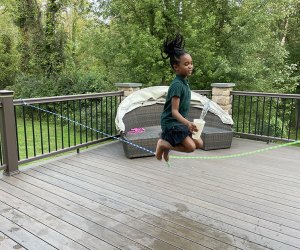
Jumping is a great activity that engages your joints. Photo by Danielle Smith
3. Jump
Try jumping on a mini-trampoline, from a chair to a sofa, or on the bed. For bigger kids, you can try these jump rope games.
4. ABC Push-ups
Push up to plank position, touch your chest with your hand and say a letter of the alphabet; repeat all the way to the letter Z and alternate the hand that touches the chest.
5. Bear Walk
6. Crab Walk
7. Slither Like a Snake
8. Hammer
Put ice cubes in a plastic bag and crush them with a hammer (then use them for lemonade).
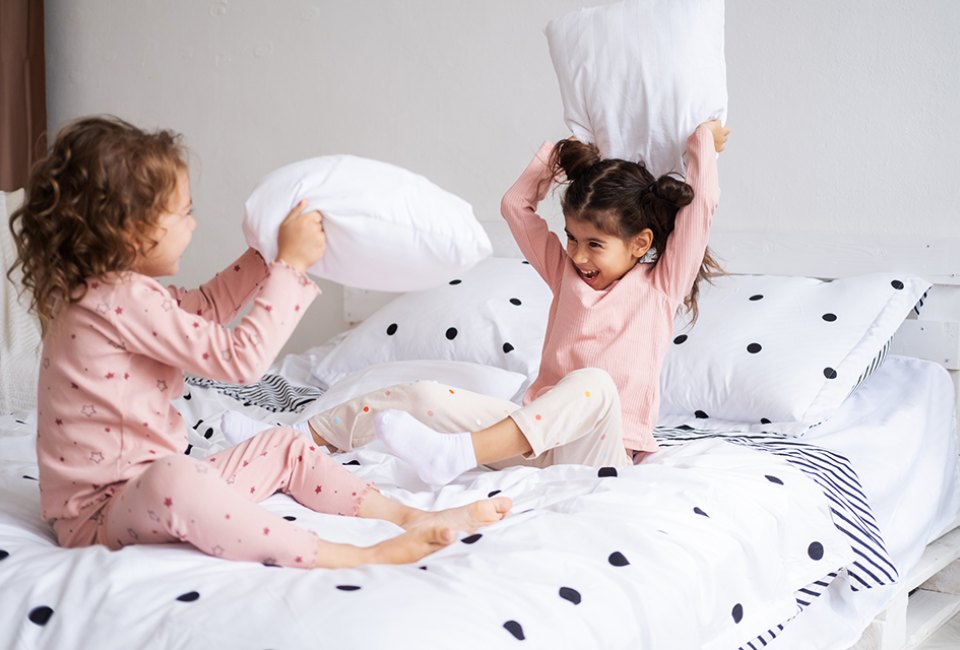
9. Have a Pillow Fight
10. Play Catch
For beginners, try playing with a stuffed animal.
11. Hang from a Chin-Up Bar
12. Climb a Rock Wall
13. Stage a Wrestling Match
14. Start a Tickle Fight
15. Bang on Some Drums
16. March in a Parade
This can be a real parade you make in your neighborhood or just a family parade with stuffed animals in your living room.
RELATED: Your Guide to Backyard Camping with Kids

Play catch with water balloons on a warm day. Photo by Georgia Maciel via Pexels
Play-Based Sensory Activities
17. Play Water Balloon Catch
This and other water games are best played outside!
18. Engage in a Tug-of-War
RELATED: 101 Conversation Starters for Kids to Help Get Them Talking

Balance is a big part of what makes hopscotch a great sensory activity.
19. Play Hopscotch
This traditional backyard game is fun for kids of all ages.
20. Play Leapfrog
21. Play Push-o-War
Put palms against each other and push as hard as you can.
22. Play Catch with a Balloon
23. Play by Candlelight
24. Play with the Stereo Dial
Experiment with loud and soft sounds; go slowly.
25. Play a Listening Game
Sit quietly and guess the sounds you hear.
26. Play in a Sandbox
Time to visit your local playground.
27. Play with Flashlights
Turn off the lights and play flashlight tag.
28. Play a Smell Game
Using a blindfold, have children guess different smells, such as peanut butter, maple syrup, and apples.
29. Play Cotton Ball Soccer
Blow cotton balls across a table. You score if you blow it off the other person's end.
30. Race Cotton Balls
Blow a cotton ball across the floor. The first one to reach the finish line wins!
31. Play What’s in the Bag
Put single items in paper bags and let kids guess what they are without using their eyes.
RELATED: Brainy Puzzle Games and Jigsaw Puzzles for Kids
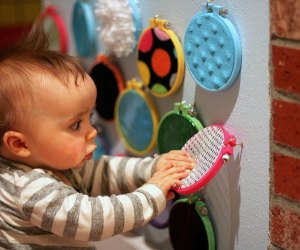
Have your child bang on a sensory board. Photo courtesy of Fun at Home with Kids
Sensory Activities for Toddlers and Babies
For babies, many of these sensory activities can be set up in the high chair for a stationary sensory baby activity center.
32. Clang Pots and Pans
33. Toddlers can push their own strollers, the laundry, or the grocery cart.
34. Have your toddler or child carry a backpack full of his or her toys and books.
35. Trace your body or hands.
36. Perform tummy-time push-ups (for babies).
37. Make your own sandbox with a bowl full of dry beans.
Experiment with different materials—beans, pasta, cheerios, and more—in a variety of sensory bins for toddlers.
38. Make Play Dough
39. Set Up A Water Table
Use ladles, cups, strainers, squirters, and funnels to manipulate the water.
40. Explore Sense of Smell
Explore how your baby or toddler reacts to different smells. If you find some are soothing or alerting, get lotions, soaps, or candles to help regulate his or her mood.
Pretend Play Sensory Activities
41. Make Shadow Puppets
42. Practice blowing out birthday candles on make-believe cakes.
43. Play Animal Footsteps
Have your child lie down and choose an animal. Using your fingers or hands, make it feel as if that animal is walking over your child's back and limbs.
44. Play with Face Paints
45. Build a Fort or Tent
46. Make Extreme Faces
47. Wear Sunglasses
RELATED: Exercise Games and Indoor Fun to Get Kids Moving

Swinging and spinning both provide long-lasting sensory input. Photo by Mommy Poppins
Movement-Based Sensory Activities
Vestibular input (swinging and spinning) is intense and provides long-lasting sensory input. Parents should monitor their children's sensitivities to these activities and offer vestibular input activities in doses. Some of these other movement-based sensory activities are much more gentle.
48. Go Swing
Try different types of swinging to see which feels best (on a tire swing, rope, monkey bars).
49. Spin
50. Rock in a Rocking Chair
51. Pull
Pull your child around on a sheet or blanket.
52. Lounge
Lounge around in a beanbag chair or a pile of pillows.
53. Make a Kid Sandwich
Press down on him or her between two pillows or couch cushions.
54. Make a Kid Burrito
Roll him or her tightly in a blanket.
55. Make a Kid Cookie
Roll a big ball firmly over the back and limbs.
Touch-Based Sensory Activities
56. Sensory Salt
Pour salt on a cookie sheet and paint with your fingers.
57. Sensory Baking Tray
Spread rice and beans out in a baking tray or pan and make a construction site for trucks. Bury small toys in rice and have your child do an archeological dig.
58. Sensory Bath
Some sensory-defensive kids hate getting wet, but sometimes bathing activities make bathtime more bearable. Rub bodies with different textures while in the bath: a smooth or nubby washcloth, a loofah, a nail brush.
RELATED: 25 Science Experiments for Toddlers

Mix a little color into shaving cream to delight visual and physical senses.
59. Shaving Cream
Put shaving cream on a placemat to squish around.
60. Touch Book
Make a touch book of different textures from your home.
61. Use a Vibrating Toothbrush
62. Trace Fingers Lightly Over the Skin
63. Put on Lotion
64. Pet the Cat or Dog
65. Butterfly Kisses
Brush your eyelashes over someone’s cheek.
66. Massage
Give each other massages
67. Mix it Up
Mix cookie dough or cake batter with hands. Find great, hands-on recipes for kids in our Guide to Easy Recipes for Kids.

Kids never outgrow their love of straws. Photo by Jody Mercier
Taste-Based Sensory Activities
Some kids need extra oral-motor activities, but these tend to be calming for everyone.
68. Sip Seltzer
69. Lick Lemons
70. Crunch Ice
71. Use Chewelry
72. Suck a Smoothie
Make smoothies and suck through a straw.
73. Chew Gum
Practice chewing gum and blowing bubbles.
74. Use Gum To Try a New Food
Give a child a strong-flavored candy or gum before trying a new food at dinner.
75. Eat Sensory-Savvy Snacks
Outdoor Sensory Activities
76. Hang Upside Down
Turn the world upside down by hanging from a tree or monkey bars
77. Have a Texture Scavenger Hunt
We've got a great create your own scavenger hunt card template.
78. Run in Circles
79. Sit Quietly
Listen to nature or a nature sounds recording.
80. Go on a Texture Walk
Collect things that are smooth, things that are bumpy, things that are soft, and so on.
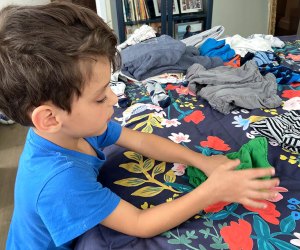
Folding socks has more benefits than just getting laundry out of the way. Photo by Sara Marentette
Sensory Activities Around the House
These activities aren't just chores that help you get things done; they're actually hands-on sensory activities in and of themselves. Chores can be great learning activities.
81. Wipe the Counters
82. Sweep
83. Swiffer
84. Break out the Dust-Buster
85. Do Laundry
Unload the washing machine and the dryer.
86. Take out the Trash
87. Repot the Plants
RELATED: Boredom-Busting Craft Activities for Kids
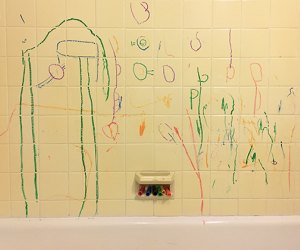
Bath crayons can help distract a water-fearful kid. Photo by Rose Gordon Sala.
More Fun Sensory Activities for Kids of All Ages
88. Add Food Coloring to Water
Or add food coloring to milk, for even brighter colors.
89. Create A Sensory Spot
Create a sensory savvy spot by placing a beanbag chair or pile
90. Use Bath Crayons or Paints
Use soap crayons or bath paints to make a masterpiece. Check our list of favorite bath toys to discover which bath crayons are our favorites.
91. Use Crazy Straws
92. Blow Whistles
No need to buy one, you can make your own straw whistles.
93. Make and Blow Pinwheels
We've got instructions on our roundup of easy paper crafts for kids.
94. Blow Feathers Off Your Hand
95. Create a Bubble Mountain
Make bubble mountains in a bowl with a straw and soapy water.
96. Blow gently on each other's faces. See who can blow the longest.
97. Hide
Hide under a blanket and read by flashlight.
98. Mazes or Dot-to-Dots
99. Squish Paint
Put dollops of different-colored paints in a baggie and squish around to mix the paints.
Many of these activities are inspired by the 2009 book Raising a Sensory Smart Child: The Definitive Handbook for Helping Your Child with Sensory Integration Issues by Lindsey Biel and Nancy Penske. This is the best book I have found for parents on children's sensory issues. In fact, it's a valuable book for any parent.
This article was first published in April 2008 but has since been updated.
Top photo via Bigstock.


